FCE — Fuel Crisis England
WHY IS FUEL SO EXPENSIVE?
Follow the money from crude oil to the forecourt — and see what happens to your household budget.
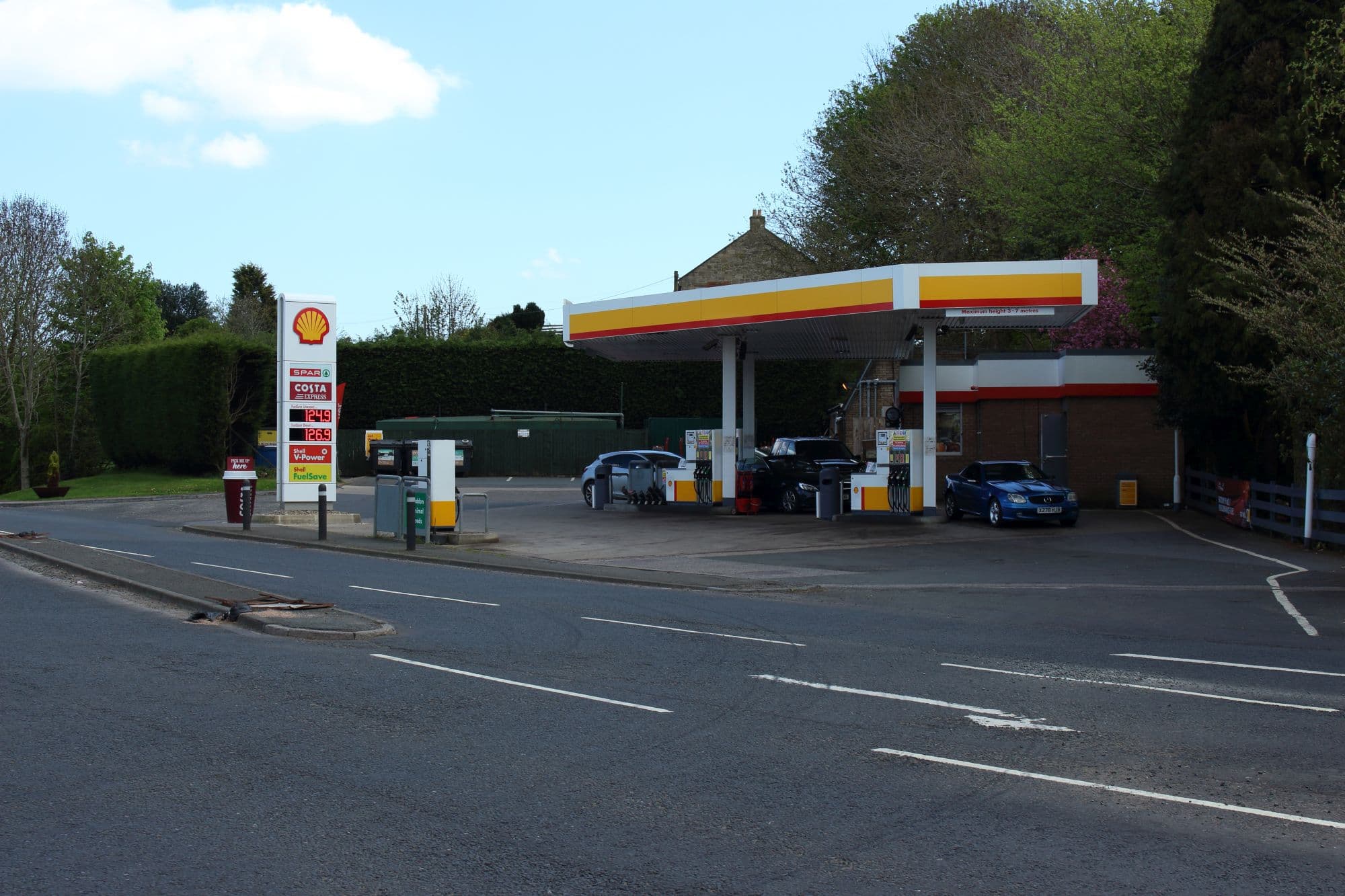
Photo: Graham Robson, via Wikimedia Commons (CC BY-SA 2.0)
A current price isn't an annual average.
It doesn't stop at the forecourt
Fuel Is Not Just a Fuel Problem
When petrol and diesel become more expensive, the impact does not stop at the pump. Higher transport costs can ripple outward into daily life.
The knock-on effect
The exact effect varies by industry and circumstance.
The big question
If fuel costs so much, where does the money go?
Choose an amount and see the breakdown, built from official UK tax rates and verified pump price data.
Based on a petrol price of 168.1p/litre in 2026. The exact split varies with the fuel price, wholesale costs, retailer margins, and VAT at any given time — this is not a fixed formula.
The government is also in the fuel price
Government makes money from fuel too
Fuel Duty is a government tax on petrol and diesel, and the government sets the rate through taxation policy. VAT is also charged on most road fuel.
Fuel Duty receipts
YTD£0.0bn
April to July 2026
Part-year (not a full year) · provisional figure
Where this number comes from: HMRC tax receipts and National Insurance contributions for the UK (monthly bulletin) →Fuel Duty receipts
HISTORICAL£0.0bn
Financial year 2025 to 2026 (provisional)
Financial year · provisional figure
Where this number comes from: HMRC Hydrocarbon Oils Bulletin →These two figures come from different HMRC publications covering different periods — a year-to-date monthly total and a provisional full financial-year total. We never blend a calendar year with a financial year, or a part-year figure with a full year, without labelling it clearly.
One of the most important sections on this site
The Government Has Policy Choices
Fuel Duty is not a fixed natural law. It is a tax rate determined by government policy — and that policy has changed repeatedly.
- 23 March 2011Previous rate57.95p/litre
Pre-2022 base rate
Budget 2011's 'fuel duty stabiliser' cut the rate by 1p, from 58.95p to 57.95p. It then stood unchanged for almost exactly 11 years, until the Spring Statement 2022 cut below. See the full 1989–2022 history further down this page.
Source: GOV.UK — Amended Fuel Duty rates: 2026 to 2027 - 23 March 2022Previous rate52.95p/litre
Spring Statement 2022: temporary 5p/litre cut
In response to fuel prices and the invasion of Ukraine, the Chancellor cut Fuel Duty by 5p/litre, from 57.95p to 52.95p, initially for 12 months.
Source: GOV.UK — Spring Statement 2022 Fuel Duty factsheet - 15 March 2023Previous rate52.95p/litre
Spring Budget 2023: cut extended
The 5p cut was extended for a further 12 months, cancelling a previously planned RPI increase.
Source: HM Treasury Spring Budget 2023 - 6 March 2024Previous rate52.95p/litre
Spring Budget 2024: cut extended again
The 5p cut was extended again, with the rate remaining at 52.95p.
Source: HM Treasury Spring Budget 2024 - 30 October 2024Previous rate52.95p/litre
Autumn Budget 2024: cut extended a further year
The 5p cut was extended for a further 12 months, pushing its scheduled expiry to 22 March 2026.
Source: GOV.UK / HM Treasury Autumn Budget 2024 - 26 November 2025Previous rate52.95p/litre
Autumn Budget 2025: further extension, later revised
The 5p cut was extended by a further 5 months to 31 August 2026, with a phased reversal originally scheduled for 1 September and 1 December 2026. This specific schedule was subsequently superseded by a statutory instrument in May 2026 — see below.
Source: GOV.UK — Fuel duty rates: 2026 to 2027 (original schedule, since amended) - 15 June 2026Current rate52.95p/litre
Current rate, extended to 31 December 2026
A statutory instrument (SI 2026/555) cancelled the previously scheduled September and December 2026 increases and extended the 52.95p rate to run through 31 December 2026.
Source: The Excise Duties (Surcharges or Rebates) (Hydrocarbon Oils etc.) (Amendment) Order 2026 (SI 2026/555) - 1 January 2027Announced future rate55.95p/litre
Confirmed rate change: 1 January 2027
SI 2026/555 confirms the rate rises to 55.95 pence per litre from this date — a partial unwinding of the 2022 cut.
Source: GOV.UK — Amended Fuel Duty rates: 2026 to 2027 - 1 March 2027Announced future rate57.95p/litre
Confirmed rate change: 1 March 2027
SI 2026/555 confirms the rate rises to 57.95 pence per litre from this date — a full return to the rate that applied before the March 2022 cut.
Source: GOV.UK — Amended Fuel Duty rates: 2026 to 2027 - 1 April 2027Proposed — not yet confirmed
Possible return to RPI-linked uprating
The Government has stated an intention to resume RPI-linked (inflation-linked) annual increases from this point. This is a stated policy intention only — it is not yet set in legislation, and no confirmed rate exists for this or any later date.
Source: HM Treasury Budget statements (policy intention, not yet legislated)
We distinguish what has actually happened from what might happen.
Look at the evidence
If Government Can Change Fuel Duty, What Should It Do About Fuel Affordability?
We won't answer this for you. Here's the evidence — you decide what it suggests.
Current Fuel Duty
52.95p
per litre, since 23 March 2022
Previous Fuel Duty
57.95p
per litre, before March 2022
Fuel Duty receipts
£24.25bn
Financial year 2025 to 2026 (provisional)
VAT on fuel
20%
standard rate, on price + duty
Average petrol price
168.1p
per litre
Average diesel price
190.7p
per litre
National Living Wage
£12.71
per hour, 21+
Bank Rate
3.75%
affects mortgage & borrowing costs
How much of the pressure at the pump is influenced by government taxation — and what policy choices could reduce that pressure?
Explore the full evidence, including historical trends and every source, on the Follow the Money page.
The question isn't only “Why is petrol expensive?”
It's where does the money go, who receives it, and what choices can be made?
Pathway one
Save Money Now
- Fuel-saving tips
- Personal fuel calculator
- Apps and tools
- Journey planning
- Money-saving checklist
Pathway two
Make Change
- Follow the money
- Government tax receipts
- Company profits
- Fuel Duty policy
- The profit-cap debate
- Contact your MP
- Lawful civic action
Protect your household today. Demand better decisions for tomorrow.
Real people, real journeys
Rising fuel costs affect ordinary life
This isn't abstract. It's the school run, the commute, the trade van, the delivery round.
Families and households
The school run, weekly shop, and family visits all rely on affordable fuel. Rising prices compete directly with other essential household costs.
Commuters
Drivers without practical access to public transport have no choice but to absorb higher costs simply to get to work.
Delivery drivers
Fuel is one of the largest single costs for delivery work, and price rises can erode already thin margins.
Taxi and private hire drivers
High daily mileage means taxi and private hire drivers are especially exposed to fuel price volatility.
Make your voice heard
Ways to take action
Every option below is lawful, peaceful, and focused on getting real answers on fuel affordability.
Contact your MP
Ask your MP about Fuel Duty, VAT, energy-company profits, and fuel affordability with an evidence-based email template.
Write to your MPSign the public petition
Add your name to call for transparency and answers on fuel affordability.
Sign the petitionShare your fuel cost experience
Tell us how fuel prices are affecting you. Anonymised, moderated experiences help build a fuller picture.
Share your experienceLearn about peaceful protest
Understand how to take part in lawful, peaceful civic action safely and responsibly.
Read the guidanceJoin a public meeting
Look out for local, lawfully organised public meetings and community discussions on fuel affordability.
Learn moreShare verified information
Help others by sharing verified facts and official sources rather than speculation.
Browse verified sourcesContact consumer organisations
Consumer bodies such as Citizens Advice and Which? can advise on consumer rights and escalate patterns of concern.
Visit Citizens AdviceRespond to government consultations
When government or regulators open public consultations relevant to fuel or energy policy, submitting a response is a direct, lawful way to be heard.
Browse GOV.UK consultationsSupport community fuel-saving initiatives
Car-sharing schemes, local lift-shares, and community transport groups can reduce costs for everyone involved.
See fuel-saving ideasDiscuss fuel affordability with local representatives
Local councillors and representatives can also raise fuel affordability concerns, alongside your MP.
Start with your MPSAVE FUEL.SAVE MONEY.FOLLOW THE MONEY.DEMAND ACCOUNTABILITY.
Understand the price.
Understand the costs.
Understand the tax.
Understand the supply chain.
Understand the impact on households and businesses.
Check the evidence.
Ask the questions.